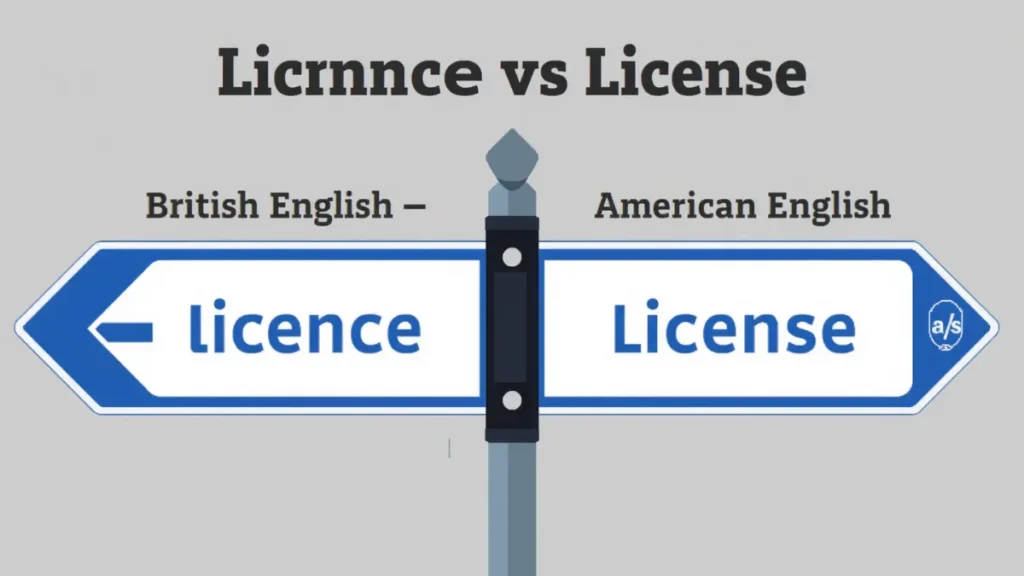
The confusion between licence or license is one of the most common English grammar doubts, especially among learners, writers, and professionals. You might see both words used in different places on driving documents, legal forms, or even software agreements and wonder why they look slightly different but seem to mean almost the same thing.
This is where the keyword licence or license becomes important, because both spellings appear frequently in real life but follow different English systems.
Imagine a young student applying for a driving permit in London and later moving to New York. In the UK, the document is called a “driving licence,” but in the US, it becomes a “driver’s license.” The confusion around licence or license grows because both words sound identical but change depending on region and grammatical use.
Many learners search licence or license to avoid mistakes in exams, writing, or professional communication.
In this guide, we will clearly break down licence or license, explain their differences, usage rules, pronunciation, and real-world applications so you never confuse them again.
Key Difference Between Licence or License
The main difference between licence or license lies in grammar and regional English usage.
- Licence (noun) – British English
- License (noun and verb) – American English (noun + verb)
In British English:
- “Licence” is used as a noun (document or permission)
- “License” is used as a verb (to grant permission)
In American English:
- “License” is used for both noun and verb
Requestor or Requester: Meaning & Correct Usage Explained?
Why Knowing the Difference Between Licence or License Matters
Understanding licence or license is important for students, professionals, and global communicators because incorrect usage can lead to grammatical errors, confusion in legal writing, and misunderstandings in official documents.
In academic writing, using the wrong form of licence or license may reduce marks. In legal and business contexts, accuracy is essential because these words often appear in contracts, driving documents, software agreements, and certifications. Even in digital platforms, proper usage reflects professionalism and attention to detail. Knowing licence or license ensures clarity, especially in international communication where British and American English both coexist.
Pronunciation of Licence or License
Both words are pronounced the same way:
- UK Pronunciation: /ˈlaɪ.səns/ (sounds like “LYE-suhns”)
- US Pronunciation: /ˈlaɪ.səns/ (sounds like “LYE-suhns”)
Even though spelling differs, pronunciation remains identical, which is one of the main reasons people get confused between licence or license.
Now let’s explore deeper differences in detail.
Grammar or Grammarly: Meaning and Correct Usage ?
Difference Between Licence or License
1. Noun Usage
- Licence (UK): A legal permission document
- Example 1: He renewed his driving licence.
- Example 2: She showed her fishing licence.
- License (US): Same meaning used as noun
- Example 1: He lost his driver’s license.
- Example 2: She applied for a business license.
2. Verb Usage
- License (UK & US): To give permission
- Example 1: The city licenses new taxis.
- Example 2: The authority licensed the restaurant.
3. British English Rule
- Noun = Licence
- Verb = License
- Example 1: He got a fishing licence.
- Example 2: The government will license the shop.
4. American English Rule
- Both noun and verb = License
- Example 1: She has a medical license.
- Example 2: The state will license drivers.
5. Legal Context
- Licence: Common in UK legal documents
- Example 1: Driving licence laws
- Example 2: Trade licence rules
- License: Common in US legal documents
- Example 1: Business license regulations
- Example 2: Medical license requirements
6. Education Usage
- Licence: UK academic systems
- Example 1: Teaching licence certificate
- Example 2: Professional licence course
- License: US academic systems
- Example 1: Teaching license exam
- Example 2: Nursing license program
7. Software Usage
- Licence: UK usage
- Example 1: Software licence agreement
- Example 2: Licensed antivirus programme
- License: US usage
- Example 1: Software license key
- Example 2: Licensed application
8. Verb Forms
- Licence: Not used as verb in UK English
- License: Used as verb in both UK & US
9. Formal Writing Preference
- UK prefers “licence” in formal documents
- US always uses “license”
10. Global Communication
- Licence: Used in Commonwealth countries
- License: Used in North America
Nature and Behaviour of Licence or License
- Licence (noun): Static, represents permission or document
- License (verb): Dynamic, represents action of granting permission
The behavior of both words depends on grammar structure and regional usage. One represents an object (licence), while the other often represents action (license).
Why People Are Confused About Licence or License
People confuse licence or license because:
- They sound identical in speech
- Spelling changes with region
- Both refer to similar legal meanings
- English has inconsistent spelling rules
- Online content mixes UK and US English
Difference Between Licence or License (Table)
| Feature | Licence | License |
| Grammar Type | Noun (UK) | Noun + Verb (US) |
| Usage Region | British English | American English |
| Verb Form | Not used | Used |
| Example (noun) | Driving licence | Driver’s license |
| Example (verb) | Not applicable | The state licenses drivers |
| Legal Usage | UK documents | US documents |
| Software | Software licence | Software license |
| Style | Formal UK | Formal US |
| Meaning | Permission document | Permission + action |
| Confusion Level | High | High |
Which is Better: Licence or License?
Neither licence or license is better universally because both are correct depending on the English system you are using. If you are writing for a British audience, “licence” is correct in noun form. If you are writing for an American audience, “license” is always correct in all cases. For global communication, it is important to remain consistent within one style. Businesses, academic writers, and legal professionals must choose one version based on their target audience to avoid inconsistency and errors.
Metaphorical and Simile Use of Licence or License
- “Her freedom was a licence to dream.” (metaphor for opportunity)
- “His words were like a license to express truth.” (simile of permission)
Both words symbolize freedom, authority, and permission in figurative language.
Connotative Meaning of Licence or License
- Licence: Neutral to positive (permission, legality, authority)
- License: Neutral to positive (action, authorization, control)
Examples:
- Getting a licence felt like gaining independence.
- The company licensed the software legally.
Idioms or Proverbs
- “Poetic license” – freedom to break rules in creative writing
- Example: The author used poetic license in the story.
- “License to kill” – extreme freedom or authority (often dramatic usage)
- Example: The movie character had a license to kill.
Literature, Works, and Media References
- Poetic License – Literary concept used in poetry analysis (Literary theory, Classical studies)
- The License of War – Historical writing theme in war literature (Various authors, 20th century)
Movies Related to License or Licensing Theme
- Licence to Kill (1989, UK/USA – James Bond franchise)
- The Social Network (2010, USA – software licensing and intellectual property theme)
- Pirates of Silicon Valley (1999, USA – tech licensing and innovation)
Frequently Asked Questions (FAQs)
1. What is the main difference between licence or license?
Licence is a British noun form, while license is an American noun and verb form.
2. Is license correct in British English?
Yes, but only as a verb.
3. Can I use licence in American English?
No, Americans prefer license for both nouns and verbs.
4. Why do both spellings exist?
Because of historical differences between British and American English.
5. Which one should I use in exams?
Use British or American form consistently depending on your syllabus.
How Licence or License Is Useful in Society
Both licence or license are essential in law, education, business, and technology. They regulate permission systems such as driving, education certification, software use, and professional practice. Without licensing systems, society would lack structure, safety, and legal control. These terms ensure that only qualified individuals perform certain tasks, protecting public safety and maintaining standards.
Final Words
Understanding licence or license is not just about spellingit is about communication accuracy. Whether you are a student, professional, or writer, using the correct form ensures clarity and credibility. Both words serve the same core purpose: granting or representing permission. The key is knowing when and where to use each form depending on British or American English. Mastering this small difference can significantly improve your writing quality.
Conclusion
The confusion between licence or license is common, but once understood, it becomes simple to apply correctly. Both words share the same meaning but differ in grammatical function and regional usage.
Licence is primarily British English for nouns, while license is used in American English for both noun and verb forms. This distinction is important in legal, academic, and professional communication.
By mastering this difference, writers can avoid mistakes and improve clarity. Ultimately, the choice depends on your audience, but consistency is the key to effective writing.

I am Arshman Ali a professional English writer and English professor with a passion for language and a commitment to excellence. I bring precision and clarity to my writing, and the same high standards into my classroom. For me, language is not just a profession it is a purpose.