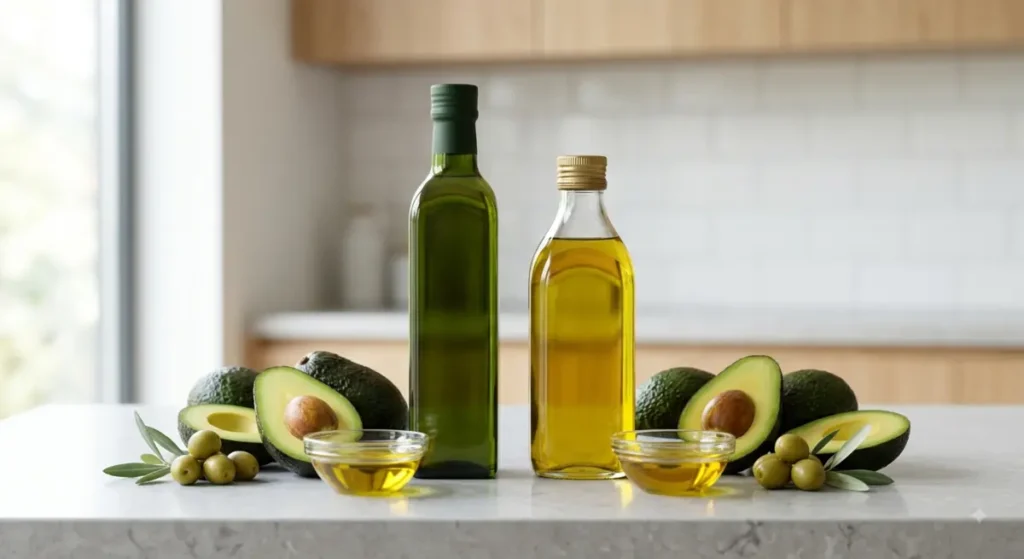
Stand in any kitchen aisle and you’ll see two bottles staring back at you: avocado oil and olive oil. Both are green, claim to be healthy and Both cost more than the vegetable oil next to them. So which one do you buy?
This is why people search for “avocado oil or olive oil.” They are not confused about spelling or grammar. They are confused about use. One oil handles high heat better. One has a stronger flavor. One is newer to store shelves. Most people don’t know which oil fits their cooking style, their health goals, or their budget.
This article gives you a fast answer first, then the full picture. You’ll learn where each oil comes from, how they differ, which mistakes to avoid, and how real people use them in daily life. By the end, you’ll know exactly which bottle to reach for and when to use both.
Avocado Oil or Olive Oil : Quick Answer
Use olive oil for salad dressings, dips, and low-to-medium heat cooking. Its flavor is bold and works well in Mediterranean dishes.
Use avocado oil for high-heat cooking like searing, grilling, and stir-frying. It has a mild taste and a higher smoke point.
Example: Drizzle olive oil on a fresh salad. Use avocado oil to sear a steak in a hot pan.
If you only buy one, pick extra virgin olive oil for everyday use. If you cook at high heat often, keep avocado oil on hand too.
The Origin of Avocado Oil and Olive Oil
Olive oil has a long history. People in the Mediterranean have pressed olives for oil since around 4000 BCE. Ancient Greeks and Romans used it for cooking, medicine, and religious rituals. It became a core part of Mediterranean food culture and spread across the world through trade.
Avocado oil is much newer. Avocados are native to Central America, and people there ate the fruit for thousands of years. But avocado oil as a cooking product only became common in the last few decades. Mexico and New Zealand are now leading producers. Food companies started marketing it as a modern, healthy alternative to older oils.
This gap in history explains why olive oil feels “traditional” and avocado oil feels “trendy.” Both are valid choices, but they come from different food traditions.
Avocado Oil vs Olive Oil : Key Differences
The real confusion isn’t spelling. It’s a function. Here’s how the two oils compare on the things that matter most in the kitchen.
| Feature | Olive Oil | Avocado Oil |
| Smoke point | 350–410°F (extra virgin, lower) | 480–520°F |
| Flavor | Strong, fruity, peppery | Mild, buttery |
| Best use | Dressings, dips, sautéing | Searing, grilling, roasting |
| Fat type | Monounsaturated | Monounsaturated |
| Price | Moderate | Higher |
| Shelf life | 18–24 months | 12–18 months |
| Origin | Mediterranean | Central America / Mexico |
Both oils are high in monounsaturated fat, which supports heart health. The main difference is heat tolerance and taste. Olive oil breaks down faster under high heat. Avocado oil holds up better.
Which Oil Should You Use?
If you cook mostly at low or medium heat: Choose olive oil. It works for sautéing vegetables, making sauces, and finishing dishes.
If you sear, grill, or stir-fry often: Choose avocado oil. It won’t burn or smoke as fast.
If you want a strong flavor: Choose extra virgin olive oil. It adds taste to salads and bread.
If you want a neutral taste: Choose avocado oil. It won’t change the flavor of your dish.
If budget matters most: Choose olive oil. It’s usually cheaper and easier to find.
If you’re cooking for someone with a mild allergy risk to olives: Avocado oil is a safe swap, though true olive oil allergies are rare.
Many home cooks keep both. Olive oil for dressings and light cooking. Avocado oil for the grill and the hot pan.
Common Mistakes with Avocado Oil and Olive Oil
Mistake 1: Using extra virgin olive oil for deep frying. It has a lower smoke point. High heat can burn it and create a bitter taste. Fix: Use avocado oil or refined olive oil for deep frying.
Mistake 2: Assuming avocado oil is always “healthier.” Both oils have similar fat profiles. Avocado oil is not automatically better for you. Fix: Choose based on cooking method, not marketing claims.
Mistake 3: Buying cheap avocado oil labeled “pure.” Some bottles are mixed with other oils. Studies have found mislabeled products on store shelves. Fix: Buy from trusted brands and check for third-party testing.
Mistake 4: Storing oil near heat or light. Both oils go rancid faster in sunlight or near the stove. Fix: Store in a cool, dark cabinet.
Mistake 5: Using olive oil in baking recipes that call for a neutral oil. Its strong flavor can clash with sweet baked goods. Fix: Use avocado oil or a light olive oil for baking.
Avocado Oil or Olive Oil in Everyday Examples
In emails (meal planning at work): “Can everyone bring a dish for the potluck? I’m making a salad with olive oil dressing.”
In news headlines: “Report Finds Some Avocado Oil Brands Diluted with Cheaper Oils”
In social media captions: “Sunday reset: avocado toast, olive oil drizzle, iced coffee ☕🥑”
Formal writing (a nutrition guide): “Both avocado oil and olive oil are rich sources of monounsaturated fatty acids and may support cardiovascular health when used as part of a balanced diet.”
Recipe blogs: “Sear the salmon in avocado oil over high heat, then finish with a splash of olive oil before serving.”
Avocado Oil or Olive Oil : Google Trends & Usage Data
Search interest for “avocado oil or olive oil” tends to rise around New Year’s health resolutions and summer grilling season. Olive oil remains the most searched term overall, especially in the US, UK, Italy, Spain, and Greece, where it’s tied to daily cooking habits.
Avocado oil searches are growing fastest in the US, Canada, and Australia. This growth links to interest in high-heat cooking, keto diets, and clean-label food trends. Mexico, as a top avocado oil producer, also shows steady interest tied to both production and local use.
Globally, olive oil still leads in total search volume, but avocado oil is closing the gap each year as more people look for high-smoke-point alternatives.
Comparison Table: Oil Variations Side by Side
| Term | What It Means | Common Use |
| Extra virgin olive oil | Unrefined, first cold press | Dressings, dips, finishing |
| Light/refined olive oil | Processed, milder taste, higher smoke point | Baking, higher-heat cooking |
| Cold-pressed avocado oil | Unrefined, mild flavor | Sautéing, light cooking |
| Refined avocado oil | Processed, very high smoke point | Grilling, searing, frying |
| Avocado oil blend | Mixed with other oils | General cooking (check label) |
FAQs
1. Is avocado oil better than olive oil for cooking? It depends on the method. Avocado oil is better for high heat. Olive oil is better for flavor and low-heat dishes.
2. Can I substitute avocado oil for olive oil in a recipe? Yes, in most recipes. Expect a milder taste and a higher heat tolerance.
3. Which oil is healthier, avocado or olive oil? Both are similar in fat content and heart-health benefits. Neither is clearly “healthier” overall.
4. Why is avocado oil more expensive than olive oil? Avocado oil production is newer and smaller in scale, which raises the cost.
5. Does avocado oil taste different from olive oil? Yes. Avocado oil has a mild, buttery taste. Olive oil, especially extra virgin, has a stronger, fruitier flavor.
6. Can I fry it with olive oil? Yes, but use refined olive oil, not extra virgin, since it handles heat better.
7. Which oil is better for salad dressing? Olive oil. Its bold flavor pairs well with vinegar, lemon, and herbs.
Conclusion
The choice between avocado oil and olive oil isn’t about right or wrong. It’s about matching the oil to the task. Olive oil brings bold flavor and works best in dressings, dips, and gentle cooking. Avocado oil brings a mild taste and handles high heat without breaking down.
Both oils offer similar health benefits, so don’t choose based on marketing alone. Instead, think about how you cook. If you sauté and dress salads often, olive oil covers most needs. If you sear, grill, or stir-fry at high heat, avocado oil is the safer choice.
Many kitchens keep both. Use olive oil for flavor. Use avocado oil for heat. Read labels carefully, store both away from light and heat, and buy from trusted brands to avoid diluted products.
Now you know exactly which bottle to reach for and why.

I am Bahadar Ali, a professional content writer and the author behind GrammarDrive.com. I am passionate about making grammar simple and accessible for everyone. Through my writing, I aim to help learners and professionals communicate with clarity and confidence.