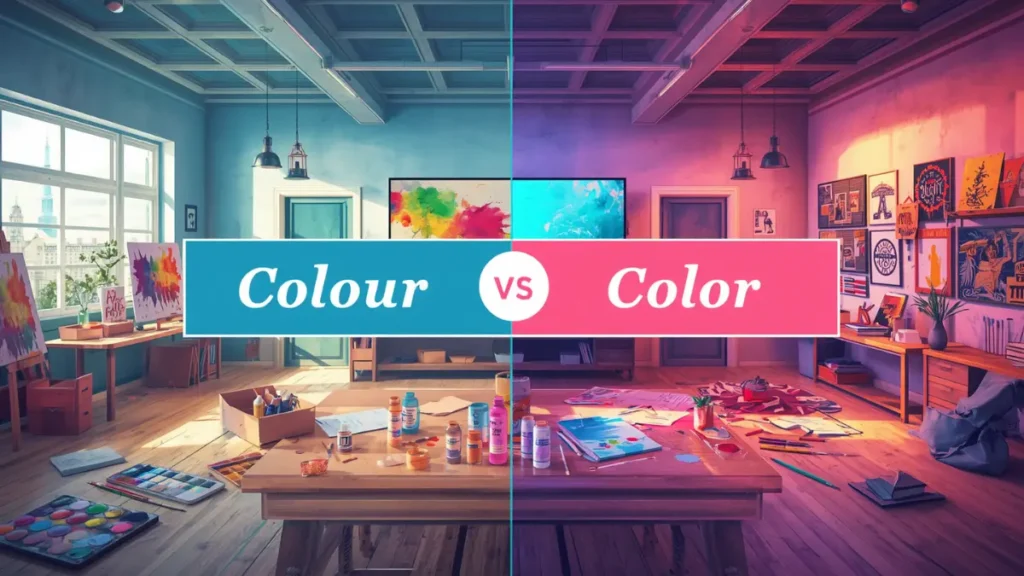
Many English learners and writers often feel confused about colour or color. You may see “colour” in British books and “color” on American websites. Both look correct, so people wonder which spelling they should use.
Imagine writing an email, blog post, or school essay and stopping because you are unsure whether to type colour or color. This small spelling difference creates a lot of confusion for students, bloggers, businesses, and professionals around the world.
People search for colour or color because they want to write correctly for their audience. Some need British English for exams or academic work, while others need American English for websites and business communication.
Understanding colour or color helps improve grammar, professionalism, and confidence in writing. The good news is simple: both spellings are correct. The difference depends on the type of English you use. In this article, you will learn the meaning, origin, spelling rules, examples, and best usage tips for colour or color in simple and clear language.
Colour or Color – Quick Answer
- Colour = British English spelling
- Color = American English spelling
Both words mean the same thing: the appearance of something based on light, such as red, blue, green, or yellow.
Examples
- UK: Her favorite colour is blue.
- US: Her favorite color is blue.
👉 The meaning stays the same. Only the spelling changes.
Requestor or Requester: Meaning & Correct Usage Explained?
The Origin of Colour or Color
The word comes from the Latin word “color.” Later, it entered Old French as “colour.” English adopted the French-style spelling for many years.
In the 1800s, American dictionary writer Noah Webster simplified many British spellings. He removed the “u” from words like:
- colour → color
- honour → honor
- labour → labor
This created the spelling difference between British and American English.
British English vs American English Spelling
British English keeps the traditional spelling with “u,” while American English removes it.
| British English | American English |
| colour | color |
| favourite | favorite |
| honour | honor |
| labour | labor |
Examples
- UK: The wall has a bright colour.
- US: The wall has a bright color.
Comparison Table: Colour vs Color
| Feature | Colour | Color |
| English Style | British English | American English |
| Used In | UK, India, Australia | USA |
| Meaning | Same | Same |
| Formality | Standard | Standard |
| Spelling Style | Traditional | Simplified |
Which Spelling Should You Use?
Your audience decides the correct spelling.
Use “Colour” if:
- You write for the UK
- You follow British English
- You study in Commonwealth countries
- Your school uses British grammar
Use “Color” if:
- You write for Americans
- Your audience is in the USA
- You create US-based content
- You follow American English rules
Global Writing Tip
If your audience is international, choose one spelling style and stay consistent throughout your writing.
Common Mistakes with Colour or Color
1. Mixing Both Spellings
❌ The color of the neighbour’s house has changed colour.
✔ Use one style only.
2. Thinking One Is Wrong
❌ “Colour” is incorrect.
✔ Both are correct in different English systems.
3. Using UK Spelling for US Clients
❌ British spelling in American business writing
✔ Use “color” for US audiences.
4. Forgetting Consistency
❌ Changing spelling in the same article
✔ Keep the same spelling throughout.
Colour or Color in Everyday Examples
Emails
- Please update the brand color/colour palette.
News Writing
- Scientists discovered a rare bird with bright colour/color feathers.
Social Media
- I love the color/colour of this sunset!
Formal Writing
- The artist used warm colours/colors in the painting.
Colour or Color – Google Trends & Usage Data
“Colour” is more popular in:
- United Kingdom
- India
- Pakistan
- Australia
- New Zealand
“Color” is more popular in:
- United States
- American media
- US-based websites
Global Trend
“Color” appears more online because American websites dominate internet content. However, “colour” remains standard in British and Commonwealth education systems.
FAQs About Colour or Color
1. Is colour or color correct?
Both are correct. The spelling depends on British or American English.
2. Which spelling is British English?
“Colour” is British English.
3. Which spelling is American English?
“Color” is American English.
4. Do colour and color mean the same thing?
Yes, both words have the same meaning.
5. Should I use colour or color in IELTS?
Use “colour” because IELTS follows British English.
6. Can I mix both spellings in one article?
No. Choose one style and stay consistent.
7. Why did Americans remove the “u”?
Noah Webster simplified many spellings in American English.
Conclusion
The confusion between colour or color is very common, but the rule is simple. Both spellings are correct, and both have the same meaning. The difference depends on regional English usage. British English uses colour, while American English uses color. This spelling change developed because American English simplified many traditional British spellings.
Choosing the correct version depends on your audience. If you write for the UK, Australia, India, or Commonwealth countries, use colour. If your audience is American, use color. In global writing, consistency matters most. Do not switch between spellings in the same document.
Understanding colour or color improves your grammar accuracy, writing confidence, and professional communication. Whether you are writing emails, blogs, essays, or business content, using the correct spelling helps your work look polished and clear. Once you know the difference, choosing between colour or color becomes easy and natural.

I am Arshman Ali a professional English writer and English professor with a passion for language and a commitment to excellence. I bring precision and clarity to my writing, and the same high standards into my classroom. For me, language is not just a profession it is a purpose.