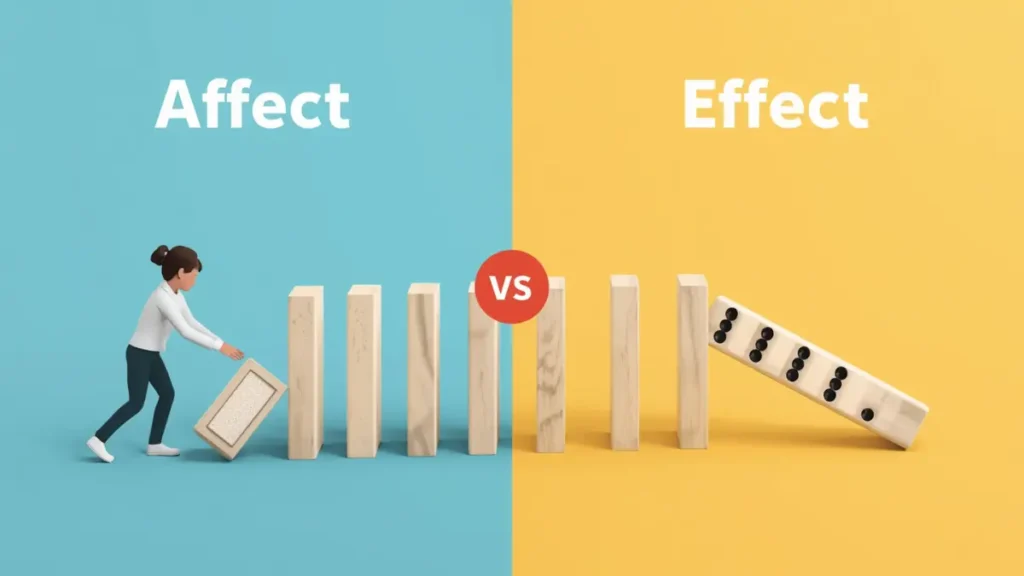
Many English learners and native speakers confuse affect and effect. The words sound similar, and both relate to change or results. Because of this, people often search for “affect or effect” to learn the correct meaning and usage.
The confusion becomes even bigger in emails, school essays, business writing, and social media posts. A small mistake can change the meaning of a sentence. For example, writing “The weather effected my mood” instead of “The weather affected my mood” is a common grammar error.
The good news is that the difference is simple once you learn the basic rule. In most cases, affect is a verb, while effect is a noun. Understanding this rule helps you write more clearly and professionally.
In this guide, you will learn the meaning of both words, their history, spelling differences, common mistakes, everyday examples, and tips for choosing the right one. By the end, you will confidently know when to use affect and when to use effect.
Affect or Effect – Quick Answer
| Word | Part of Speech | Meaning | Example |
| Affect | Verb | To influence or change something | Stress can affect sleep. |
| Effect | Noun | A result or outcome | The medicine had a good effect. |
Simple Rule
- Affect = Action
- Effect = End Result
Examples
- Loud noise can affect your hearing.
- The effect of exercise is better health.
- Social media can affect young people.
- The new law had a positive effect on business.
Read more: Burnt or Burned: Which Spelling Is Correct?
The Origin of Affect or Effect
Both words come from Latin roots and entered English many centuries ago.
Origin of “Affect”
The word affect comes from the Latin word affectare, which means “to influence” or “to act upon.” Over time, English speakers used it mainly as a verb.
Origin of “Effect”
The word effect comes from the Latin word effectus, meaning “result” or “completion.” It became commonly used as a noun in English.
Why the Confusion Exists
The confusion happens because:
- The words look similar.
- They sound similar.
- Both relate to change or influence.
- Sometimes both can act as nouns or verbs in rare formal uses.
However, in modern everyday English:
- Affect is usually a verb.
- Effect is usually a noun.
Read more: Smelled or Smelt: What’s the Difference ?
British English vs American English Spelling
Unlike words such as “colour” and “color,” the spelling of affect and effect stays the same in both British and American English.
Comparison Table
| Usage | British English | American English |
| Influence something | Affect | Affect |
| Result or outcome | Effect | Effect |
| Example sentence | Rain can affect travel. | Rain can affect travel. |
| Example sentence | The effect was immediate. | The effect was immediate. |
Key Point
There is no spelling difference between British and American English for these words. Only usage and grammar matter.
Which Spelling Should You Use?
You should use the correct word based on meaning, not country.
Use “Affect” When:
- You mean influence or change.
- You need a verb.
- You describe an action happening.
Examples
- Bad weather can affect flights.
- Music affects mood.
- Lack of sleep affects focus.
Use “Effect” When:
- You mean result or outcome.
- You need a noun.
- You describe what happened after an action.
Examples
- The effect of the storm was serious.
- The new policy had little effect.
- Exercise has positive effects on health.
Audience Advice
| Audience | Best Choice |
| US readers | Use standard grammar rules |
| UK readers | Use standard grammar rules |
| Global audience | Keep writing simple and clear |
Since the spelling is the same worldwide, focus on correct meaning and grammar.
Common Mistakes with Affect or Effect
Many people mix these words in daily writing.
Mistake 1
❌ The rain effected my plans.
✅ The rain affected my plans.
Mistake 2
❌ The medicine had a good affect.
✅ The medicine had a good effect.
Mistake 3
❌ Social media effects teenagers.
✅ Social media affects teenagers.
Mistake 4
❌ The new law will effect students emotionally.
✅ The new law will affect students emotionally.
Easy Memory Trick
- Affect = Action
- Effect = End Result
This trick helps most people remember the difference quickly.
Affect or Effect in Everyday Examples
In Emails
- Your feedback will affect future updates.
- The changes had a positive effect on sales.
In News Writing
- Rising prices affect families worldwide.
- The policy’s effect was immediate.
On Social Media
- Stress affects mental health.
- The effect of the video was huge online.
In Formal Writing
- Climate change affects agriculture.
- Researchers studied the effects of pollution.
Affect or Effect – Google Trends & Usage Data
Search interest for “affect or effect” stays high because many writers struggle with these words.
Popularity by Country
| Country | Common Search Interest |
| United States | Very High |
| United Kingdom | High |
| Canada | High |
| Australia | High |
| India | Growing |
Why People Search It
People often search this keyword when:
- Writing essays
- Sending professional emails
- Creating blog content
- Studying grammar
- Preparing for exams
Usage Context
| Context | More Common Word |
| Academic writing | Affect |
| Business reports | Effect |
| Psychology | Affect |
| Science articles | Effect |
Affect vs Effect Comparison Table
| Feature | Affect | Effect |
| Main Use | Verb | Noun |
| Meaning | Influence something | Result or outcome |
| Example | Heat affects plants. | The effect was harmful. |
| Grammar Role | Action | Result |
| Common Usage | Everyday writing | Formal and casual writing |
FAQs About Affect or Effect
Is affect a verb or noun?
Usually, affect is a verb meaning “to influence.”
Is effect a noun or verb?
Usually, effect is a noun meaning “result.”
How do I remember affect vs effect?
Remember this simple rule:
- Affect = Action
- Effect = End Result
Can effect be used as a verb?
Yes, but it is rare. It means “to bring about.”
Example: The company hopes to effect change.
Can affect be a noun?
Yes, in psychology, “affect” can mean emotional expression. This use is uncommon in daily writing.
Which is more common in everyday English?
Both are common, but people use affect more often in action sentences.
Is there a spelling difference between UK and US English?
No. Both countries use the same spelling for affect and effect.
Conclusion
Understanding the difference between affect and effect can improve your writing and help you avoid common grammar mistakes. Although the words look and sound similar, their meanings are different. In most situations, affect is a verb that means “to influence,” while effect is a noun that means “a result.”
This simple rule works in emails, essays, business reports, news writing, and social media posts. Once you remember “Affect = Action” and “Effect = End Result,” choosing the correct word becomes much easier.
There is also no spelling difference between British and American English, so writers worldwide follow the same grammar rules. The key is understanding the role each word plays in a sentence.
If you want your writing to sound professional and clear, always check if you are describing an action or a result. That small step will help you use affect and effect correctly every time.

I am Bahadar Ali, a professional content writer and the author behind GrammarDrive.com. I am passionate about making grammar simple and accessible for everyone. Through my writing, I aim to help learners and professionals communicate with clarity and confidence.