Have you ever paused while writing a sentence and wondered whether to use may or might? You are not alone. Many English learners and even native speakers search for “may or might” because both words express possibility, and they often seem interchangeable.
For example, should you say, “It may rain tomorrow” or “It might rain tomorrow”? Both sound correct, but they can carry slightly different meanings and levels of certainty. This small grammar choice can affect how formal, polite, or confident your message sounds.
Understanding may or might is important for everyday conversations, business emails, academic writing, and professional communication. While the differences are often subtle, knowing when to use each word can help you write and speak more naturally.
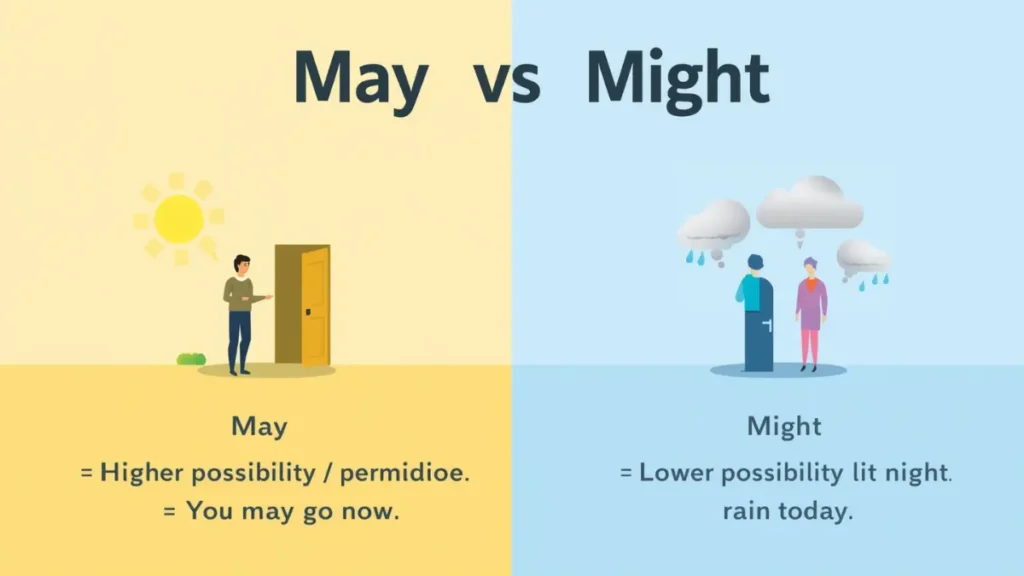
The good news is that the rules are simple. In most cases, may suggests a stronger possibility, while might often suggests a slightly weaker possibility. In this guide, you will learn the meanings, origins, examples, common mistakes, FAQs, and practical tips for using may or might correctly.
May or Might – Quick Answer
Simple Rule
- May = a possible event that is fairly likely.
- Might = a possible event that is less certain.
Examples
✅ It may rain this afternoon.
✅ It might rain this afternoon.
Both are correct, but may often sound slightly more confident.
Easy Memory Trick
- May = More likely
- Might = Maybe, but less certain
Read more; Further or Farther: Simple Guide to Spelling and Correct Usage
More Examples
| Word | Example |
| May | She may join us later. |
| Might | She might join us later. |
| May | We may win the game. |
| Might | We might win the game. |
The Origin of May or Might
Both words have deep roots in Old English.
Origin of “May”
The word may comes from the Old English word mæg, meaning “to be able to” or “to have permission.”
Origin of “Might”
The word might originally developed as the past tense form of may. Over time, it evolved into a separate modal verb used for possibility and uncertainty.
Why the Confusion Exists
The confusion happens because:
- Both express possibility.
- Both can appear in similar sentences.
- Modern English often uses them interchangeably.
- The difference is usually about tone rather than grammar.
Read more: Who or Whom: Easy Grammar Rules Explained with Examples
British English vs American English Spelling
There is no spelling difference between British English and American English for may and might.
The words are spelled the same in all major English varieties.
Comparison Table
| Feature | British English | American English |
| May | May | May |
| Might | Might | Might |
| Formal writing | Uses both | Uses both |
| Everyday speech | Uses both | Uses both |
Examples
British English
- It may snow tonight.
- We might visit London next week.
American English
- The project may finish early.
- The project might finish early.
Which Spelling Should You Use?
Since the spelling is identical worldwide, the choice depends on meaning and audience.
Use “May” When:
- The possibility seems stronger.
- You are asking permission.
- You want a more formal tone.
Examples
- You may enter the room.
- The meeting may begin soon.
- She may accept the offer.
Use “Might” When:
- The possibility is less certain.
- You are discussing hypothetical situations.
- You want a softer tone.
Examples
- It might snow next month.
- He might change his mind.
- They might arrive late.
Global Writing Advice
For international audiences:
- Use may for stronger possibility.
- Use might for weaker possibility or hypothetical situations.
Common Mistakes with May or Might
Mistake 1
❌ You might leave now. (when giving permission)
✅ You may leave now.
Mistake 2
❌ It may have happened if he tried.
✅ It might have happened if he tried.
Mistake 3
❌ May I suggest another option? (informal casual speech may sound overly formal)
✅ Might I suggest another option? (formal suggestion)
Mistake 4
❌ He may have won if he practiced harder.
✅ He might have won if he practiced harder.
May or Might in Everyday Examples
In Emails
- We may launch the product next month.
- The schedule might change.
In News Writing
- The government may introduce new policies.
- The storm might affect travel plans.
On Social Media
- I may go to the concert tonight.
- I might stay home instead.
In Formal Writing
- Researchers may discover new evidence.
- Future studies might provide additional insights.
May or Might – Google Trends & Usage Data
Searches for “may or might” remain popular because learners often struggle with modal verbs.
Countries with High Search Interest
| Country | Search Popularity |
| United States | Very High |
| United Kingdom | High |
| India | High |
| Canada | High |
| Australia | High |
Why People Search This Keyword
People commonly search for may or might when:
- Learning English grammar
- Preparing for exams
- Writing professional emails
- Improving speaking skills
- Understanding modal verbs
Common Usage Contexts
| Context | Preferred Word |
| Permission | May |
| Possibility | May or Might |
| Hypothetical situations | Might |
| Formal writing | May |
Comparison Table: May vs Might
| Feature | May | Might |
| Meaning | Possibility | Possibility |
| Certainty Level | Slightly stronger | Slightly weaker |
| Permission | Yes | Rarely |
| Formal Tone | Common | Less common |
| Example | It may happen. | It might happen. |
FAQs About May or Might
What is the main difference between may and might?
May usually shows a stronger possibility, while might suggests a lower level of certainty.
Can may and might be used interchangeably?
Often, yes. In many situations, both are grammatically correct.
Which is more formal, may or might?
May is generally considered more formal, especially when asking permission.
Can I use might for permission?
In modern English, permission is usually expressed with may, not might.
Is might the past tense of may?
Historically, yes. Today, it functions as its own modal verb.
Which word is better for academic writing?
May is often preferred because it sounds more direct and formal.
Is there a spelling difference between British and American English?
No. Both words are spelled the same in all major forms of English.
Conclusion
Understanding may or might help you communicate clearly and confidently. Both words express possibility, but they are not always identical. In general, may suggests a stronger chance that something will happen, while might suggests a lower degree of certainty. May is also commonly used for permission, especially in formal situations.
The difference is often subtle, and native speakers frequently use both words in similar ways. However, choosing the correct one can improve the tone and precision of your writing. In professional emails, academic papers, and business communication, these small grammar choices can make your message sound more polished.
There is no spelling difference between British and American English, so the same rules apply worldwide. By remembering that may is usually stronger and might is usually less certain, you can avoid common mistakes and improve your English fluency.
With regular practice, choosing between may or might will become natural in both writing and conversation.

I am Bahadar Ali, a professional content writer and the author behind GrammarDrive.com. I am passionate about making grammar simple and accessible for everyone. Through my writing, I aim to help learners and professionals communicate with clarity and confidence.