Many English learners, writers, and professionals often get confused between offence or offense when writing emails, essays, or legal documents. The confusion usually appears because both words look correct, and both are used in real English.
For example, a student might ask: “Should I write criminal offence or criminal offense?” or a writer may hesitate while typing a news article. This is why people frequently search for offence or offense to understand which spelling is right.
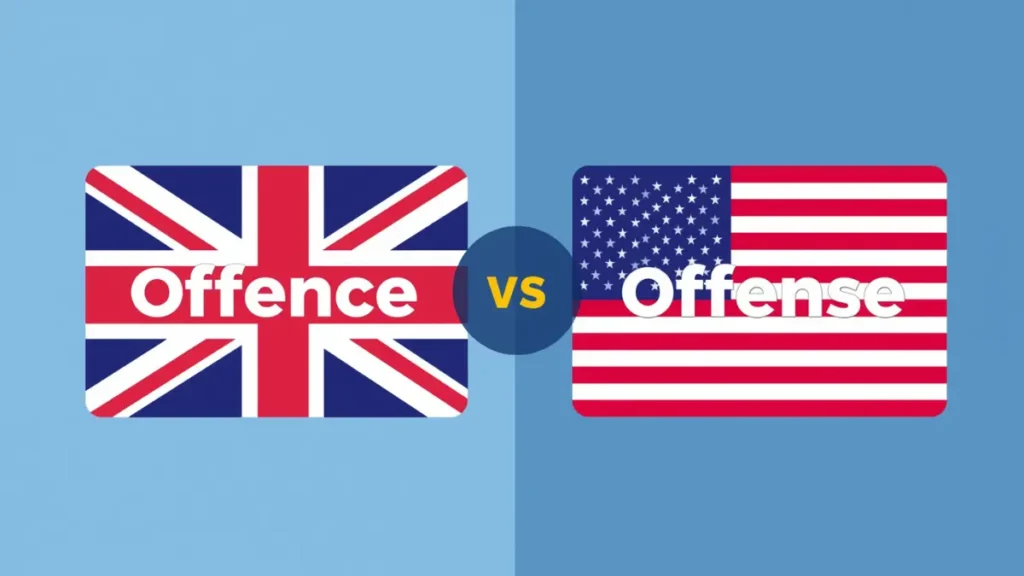
The truth is simple: both are correct, but they belong to different English systems. British English prefers offence, while American English uses offense. This small spelling difference can change the tone of your writing depending on your audience.
Many learners search for offence or offense because they want clarity in exams, professional writing, and global communication. Understanding offence or offense helps avoid mistakes and improves writing confidence. In this article, we will clearly explain offence or offense, their origin, differences, usage, and correct contexts so you never get confused again.
Offence or Offense – Quick Answer
Offence (UK English) and Offense (US English) both mean the same thing: a violation, wrongdoing, or insult.
Examples:
- UK: He was charged with a serious offence.
- US: He was charged with a serious offense.
👉 Meaning does not change—only spelling changes.
Make Do or Make Due: Correct Spelling, and Usage Explained?
The Origin of Offence or Offense
The word comes from the Latin “offensa”, meaning “hurt” or “attack.” It entered Old French as “offense”, and later came into English.
Over time:
- British English kept the older French-style spelling → offence
- American English simplified spelling rules → offense
This change happened during the 18th–19th century spelling reforms led by Noah Webster in the United States.
British English vs American English Spelling
British and American English differ mainly in spelling simplification.
| Feature | British English | American English |
| Spelling | offence | offense |
| Usage region | UK, India, Australia | USA |
| Style | Traditional | Simplified |
| Meaning | Same | Same |
Examples:
- UK: The football match ended without any offence.
- US: The football game ended without any offense.
- Receive or Recieve: Which Is the Correct Spelling?
Which Spelling Should You Use?
The correct spelling depends on your audience:
- Use “offence” if you are writing for:
- UK readers
- India, Pakistan, Australia, Canada (mostly British English)
- Academic British exams
- Use “offense” if you are writing for:
- United States audience
- American publishers
- US-based websites or SEO content
- Global writing tip:
Choose one style and stay consistent throughout your document.
Common Mistakes with Offence or Offense
- Mixing both spellings in one document
❌ He committed an offence and another offense
✔ He committed an offence (UK) / offense (US) - Thinking meanings are different
❌ They are different words
✔ They have the same meaning - Using UK spelling in US formal writing
❌ Writing “offence” for US legal text
✔ Use “offense” - Inconsistent blog writing
❌ Switching spelling in paragraphs
✔ Stick to one style
Offence or Offense in Everyday Examples
Emails:
- Your behavior may be considered an offense/offence under company policy.
News writing:
- The suspect was arrested for a cyber offense/offence.
Social media:
- No offense/offence, but that opinion is incorrect.
Formal writing:
- The court classified the act as a criminal offense/offence.
Offence or Offense – Google Trends & Usage Data
- Offence is more popular in:
- UK
- India
- Australia
- Commonwealth countries
- Offense is more popular in:
- United States
- US-based legal documents
- American media
📊 Overall trend:
- “Offense” dominates global web usage due to US internet influence.
- “Offence” dominates academic and Commonwealth legal writing.
Comparison Table: Offence vs Offense
| Aspect | Offence | Offense |
| English Type | British English | American English |
| Meaning | Wrongdoing | Wrongdoing |
| Usage Region | UK, Commonwealth | USA |
| Formality | Standard academic | Standard academic |
| Example | Criminal offence | Criminal offense |
FAQs
1. Is offence and offense the same?
Yes, both have the same meaning.
2. Which is correct, offence or offense?
Both are correct depending on English style.
3. Is offence British English?
Yes, “offence” is British English.
4. Is offense American spelling?
Yes, “offense” is American English.
5. Can I mix both spellings?
No, always stay consistent.
6. Does meaning change?
No, meaning is exactly the same.
7. Which spelling is better for SEO?
Use based on your target audience location.
Conclusion
The confusion between offence or offense is very common among English learners, but the solution is simple. Both words mean exactly the same thing: a violation, wrongdoing, or insult. The only difference lies in spelling style. Offence is used in British English, while offense is preferred in American English. This difference developed due to historical spelling reforms and regional language evolution.
Choosing the correct form depends on your audience. If you are writing for the UK, India, or other Commonwealth countries, use offence. If your audience is American, use offense. For global writing, consistency is more important than choice.
Understanding offence or offense improves your grammar accuracy, professional writing, and communication clarity. It also helps avoid mistakes in academic, legal, and business contexts. Once you learn this rule, you will never hesitate again while writing. Whether you choose offence or offense, the meaning stays the same—only the spelling changes.

I am Arshman Ali a professional English writer and English professor with a passion for language and a commitment to excellence. I bring precision and clarity to my writing, and the same high standards into my classroom. For me, language is not just a profession it is a purpose.