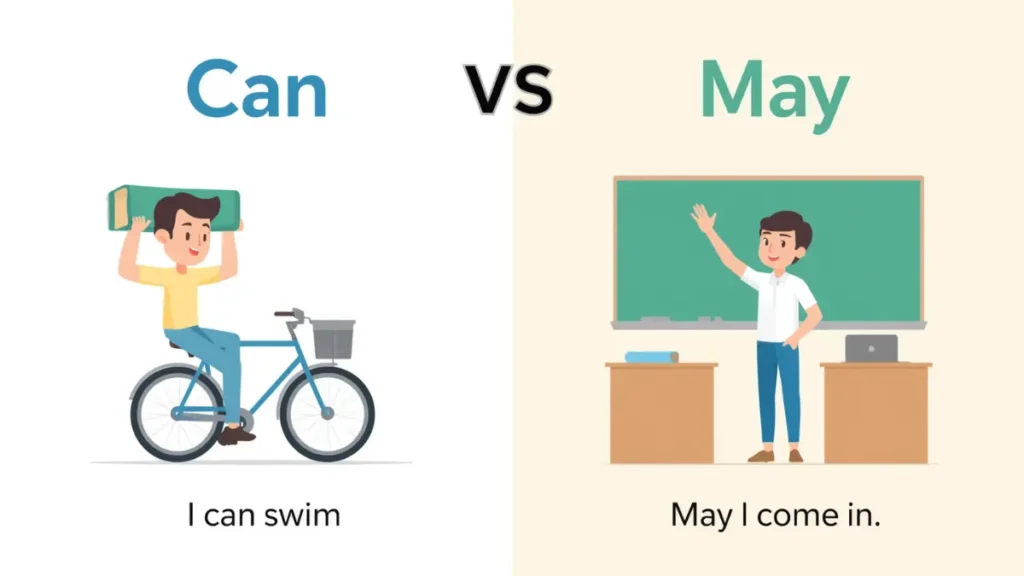
Many English learners get confused between can and may. Both words are used to ask permission or talk about possibility, but they are not the same. This small difference often creates big mistakes in writing, exams, emails, and daily speech.
People search for can or may because they want to sound more correct and polite in English. For example, should you say “Can I go?” or “May I go?” Both sound similar, but they do not always mean the same thing. Using the wrong word can make your sentence sound too casual or even incorrect in formal situations.
Understanding this difference helps you speak and write more clearly. It also improves your grammar in school, office communication, and professional writing. In this guide, you will learn the meaning of both words, their history, common mistakes, real-life examples, and when to use each one correctly. By the end, you will never confuse can or may again.
Can or May – Quick Answer
Can means ability or informal permission.
May means polite permission or possibility.
Examples
- I can swim. (ability)
- Can I use your phone? (informal permission)
- May I come in? (polite permission)
- It may rain today. (possibility)
Simple Rule
- Use can for ability or casual talk.
- Use may for formal permission or possibility.
Read more: Imply or Infer: What’s the Difference and How to Use
The Origin of Can or May
Can
The word can come from Old English cunnan, meaning “to know how” or “to be able.” Over time, it became used for ability and informal permission.
May
The word may come from Old English magan, meaning “to be powerful” or “to be allowed.” It developed a more formal and polite tone in English.
Why Confusion Happens
Both words are used for permission, but tone is different:
- Can = ability + informal permission
- May = polite permission + possibility
British English vs American English Usage
There is no spelling difference between British and American English for can or may. However, usage style differs slightly.
Comparison Table
| Meaning | British English | American English |
| Ability | can | can |
| Informal permission | can | can |
| Formal permission | may | may |
| Possibility | may | may |
Both regions follow the same grammar rules, but Americans use “can” more often in speech.
Which Spelling Should You Use?
Since there is no spelling difference, focus on context instead of region.
Use “can” when:
- Talking casually
- Showing ability
- Asking informal permission
Use “may” when:
- Writing formal emails
- Speaking politely
- Expressing possibility
Global Tip:
If unsure, use may in formal writing and can in daily conversation.
Read more : Further or Farther: Simple Guide to Spelling and Correct Usage
Common Mistakes with Can or May
Mistake 1
❌ Can I come in, sir? (formal setting)
✅ May I come in, sir?
Mistake 2
❌ I may swim. (ability meaning)
✅ I can swim.
Mistake 3
❌ Can it rain tomorrow?
✅ It may rain tomorrow.
Quick Fix Rule:
- Ability → can
- Permission → can/may
- Polite or formal → may
Can or May in Everyday Examples
Emails
- “May I request a meeting time change?”
- “Can you send me the file?”
News Writing
- “It may rain across the region today.”
- “The team can qualify for the finals.”
Social Media
- “Can anyone help me with this?”
- “This may be the best day ever!”
Formal Writing
- “You may submit your application online.”
- “Employees can access the system 24/7.”
Can or May – Usage Trends
Can
- Most common in daily speech
- Used heavily in informal communication
- Popular in social media and chat apps
May
- More common in academic and formal writing
- Used in professional emails and legal text
- Often preferred in polite requests
Global Usage
| Region | Most Common Word |
| USA | can |
| UK | can / may |
| India | may (formal), can (informal) |
| Pakistan | may (formal), can (informal) |
| Global English | both |
Can vs May Comparison Table
| Feature | Can | May |
| Meaning | Ability / informal permission | Formal permission / possibility |
| Tone | Casual | Polite |
| Example | Can I go? | May I go? |
| Usage | Daily speech | Formal writing |
| Strength | Strong, direct | Soft, polite |
FAQs
1. What is the main difference between can and may?
Can show ability or informal permission. May shows polite permission or possibility.
2. Is “can I go” correct?
Yes, but it is informal. In formal situations, use “may I go.”
3. Can may and can be used interchangeably?
No. They have different tones and meanings.
4. Which is more polite, can or may?
May is more polite.
5. Is “may” used for possibility?
Yes, “may” is often used for future possibility.
6. Do British and American English differ in usage?
No major difference. Both use the same grammar rules.
7. Which should I use in emails?
Use may for formal emails and can for casual messages.
Conclusion
Understanding can or may is simple once you focus on meaning and tone. Both words are important in English, but they are not the same. Can is direct and informal, often used for ability or casual permission. May is softer and more polite, often used in formal writing and when expressing possibility.
If you want to speak natural English, use can in everyday conversations with friends, family, or informal settings. Use may when you want to sound respectful, especially in school, office emails, or professional communication. This small change can make your English sound more polished and correct.
Remember the simple rule: can = ability, may = polite permission or possibility. Once you master this, your grammar will improve quickly and your communication will become clearer and more confident in any situation.

I am Arshman Ali a professional English writer and English professor with a passion for language and a commitment to excellence. I bring precision and clarity to my writing, and the same high standards into my classroom. For me, language is not just a profession it is a purpose.