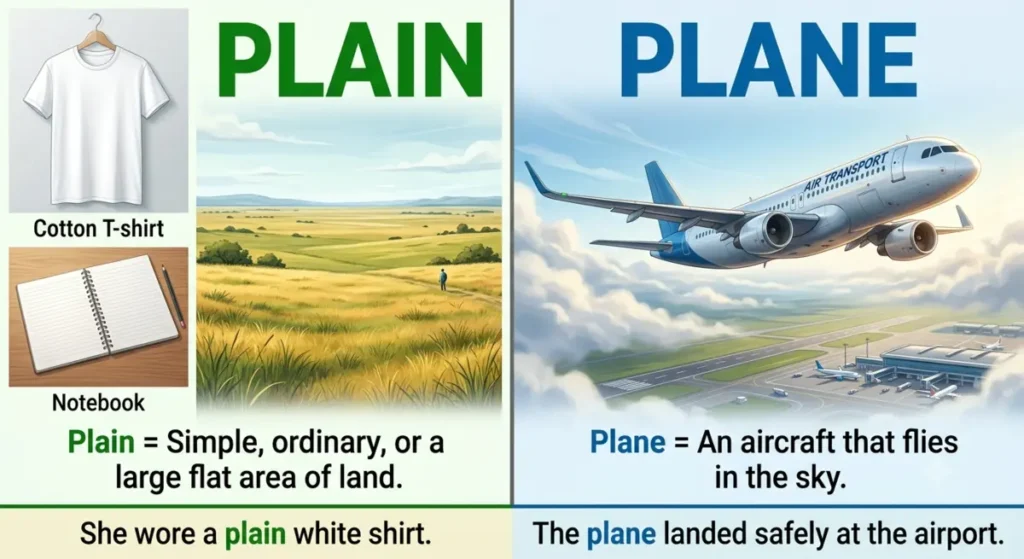
Many English learners confuse plain and plane because the two words sound the same. They are homophones, which means they share pronunciation but have different meanings and spellings. People often search for “plain or plane” when writing emails, school assignments, social media posts, or business documents. A small spelling mistake can completely change the meaning of a sentence.
For example, “a plain shirt” means a simple shirt with no design. But “a plane shirt” is incorrect because plane ” usually means an aircraft or a flat surface. This confusion is common in both beginner and advanced English writing.
Understanding the difference between plain and plane helps improve spelling, grammar, and communication. In this guide, you will learn the meaning of each word, their origins, spelling rules, common mistakes, and real-life examples. By the end, you will know exactly when to use plain and when to use plane with confidence.
Plain or Plane – Quick Answer
Plain means simple, clear, or without decoration.
Examples:
- She wore a plain white dress.
- The instructions were plain and easy to follow.
Plane usually means an aircraft or a flat surface.
Examples:
- The plane landed safely.
- Draw a line on the horizontal plane.
- Read more:Learnt or Learned: Which Spelling Is Correct ?
Quick Comparison Table
| Word | Meaning | Example |
| Plain | Simple or clear | A plain black bag |
| Plane | Aircraft or flat surface | The plane took off |
The Origin of Plain or Plane
The words plain and plane come from different historical roots, even though they sound alike today.
Origin of Plain
The word plain comes from the Latin word planus, meaning “flat” or “clear.” Over time, English speakers began using it to describe something simple, obvious, or undecorated.
Examples:
- plain language
- plain food
- plain clothing
Origin of Plane
The word plane also comes from the Latin planus. However, it developed different meanings in English. It later referred to flat surfaces, geometric levels, and eventually aircraft.
Examples:
- airplane
- geometric plane
- flat plane
The spelling differences exist because English evolved through French and Latin influences over hundreds of years.
Read more:Burnt or Burned: Which Spelling Is Correct?
British English vs American English Spelling
The words plain and plane are spelled the same way in both British and American English. There is no spelling difference between the two versions of English.
However, usage can differ slightly depending on context.
Examples in British English
- She prefers plain tea.
- The plane arrived late.
Examples in American English
- He likes plain pizza.
- The plane is boarding now.
Comparison Table
| Context | Plain | Plane |
| Food | Plain rice | Incorrect |
| Clothing | Plain shirt | Incorrect |
| Travel | Incorrect | Plane ticket |
| Math | Incorrect | Coordinate plane |
Which Spelling Should You Use?
The correct spelling depends entirely on your meaning.
Use “Plain” When:
- Talking about something simple
- Describing clear language
- Mentioning food without extra flavor or decoration
Examples:
- plain water
- plain English
- plain design
Use “Plane” When:
- Talking about aircraft
- Referring to geometry or flat surfaces
Examples:
- passenger plane
- Cartesian plane
Audience-Based Advice
| Audience | Best Choice |
| US readers | Use meaning-based spelling |
| UK readers | Use meaning-based spelling |
| Global audience | Keep usage simple and clear |
Because both spellings are accepted worldwide, the meaning matters more than regional spelling rules.
Common Mistakes with Plain or Plane
Many writers accidentally swap these words because they sound identical.
Incorrect:
- I took a plain to London.
Correct:
- I took a plane to London.
Incorrect:
- She wore a plane blue dress.
Correct:
- She wore a plain blue dress.
Incorrect:
- Please use plane English.
Correct:
- Please use plain English.
Tips to Remember
- Plain = simple
- Plane = airplane
A quick memory trick:
A plane flies in the air.
Plain or Plane in Everyday Examples
In Emails
- Please explain it in plain language.
- My plane arrives at 8 PM.
In News Headlines
- Passenger plane makes emergency landing.
- Celebrity seen in plain black clothing.
On Social Media
- I love plain coffee with no sugar.
- The plane view was amazing today.
In Formal Writing
- Use plain English in business reports.
- The graph shows points on a coordinate plane.
Plain or Plane – Google Trends & Usage Data
Search interest for plain or plane is high among English learners, students, and writers. Many people search this keyword because autocorrect and pronunciation create confusion.
Usage by Context
| Word | Most Common Context |
| Plain | Fashion, food, writing |
| Plane | Travel, science, geometry |
Popular Countries Searching This Keyword
- United States
- United Kingdom
- India
- Pakistan
- Canada
Search data also shows that “plane” is more common in travel-related searches, while “plain” appears more in grammar and vocabulary learning.
Comparison Table: Plain vs Plane
| Feature | Plain | Plane |
| Part of Speech | Adjective/Noun | Noun |
| Main Meaning | Simple or clear | Aircraft or flat surface |
| Common Topic | Clothing, language, food | Travel, math |
| Example Sentence | The room looked plain. | The plane took off early. |
| Pronunciation | Same as plane | Same as plain |
FAQs About Plain or Plane
1. Is it plain or plane English?
The correct phrase is plain English because it means simple and clear language.
2. Is a flight called a plain or plane?
A flight uses a plane, which means an aircraft.
3. Why do plain and plane sound the same?
They are homophones. Homophones have the same pronunciation but different meanings and spellings.
4. Can plain mean boring?
Yes. Plain can describe something simple or not exciting.
5. What does plane mean in math?
In geometry, a plane is a flat two-dimensional surface.
6. Which word is more common?
Both are common, but they are used in different situations.
7. How can I remember the difference?
Think of the letter “e” in plane as standing for “engine” or “airplane.”
Conclusion
The difference between plain and plane is simple once you understand their meanings. Although the two words sound exactly the same, they are used in very different contexts. Plain describes something simple, clear, or undecorated. Plane refers to an aircraft or a flat surface in subjects like math and science.
Many English learners confuse these words because English pronunciation does not always match spelling. That is why learning the meaning behind each word is more important than memorizing rules alone. Using the correct spelling helps your writing look more professional and easier to understand.
If you are talking about simple food, clothing, or language, choose plain. If you are discussing travel, flying, or geometry, choose plane. A quick check before writing can prevent common grammar mistakes and improve communication in emails, schoolwork, and daily conversations.

I am Bahadar Ali, a professional content writer and the author behind GrammarDrive.com. I am passionate about making grammar simple and accessible for everyone. Through my writing, I aim to help learners and professionals communicate with clarity and confidence.