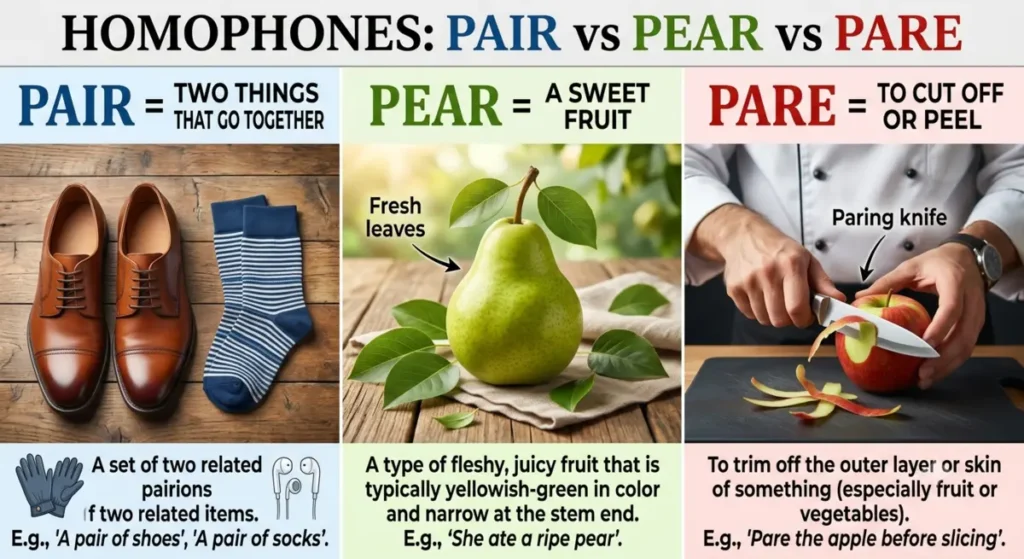
Many English learners and writers get confused by the words pair, pear, and pare. They sound exactly the same, but they have very different meanings. These words are called homophones. Homophones are words that sound alike but have different spellings and meanings.
People often search for “pair or pear or pare” because they want to avoid spelling mistakes in writing, schoolwork, emails, or social media posts. A small spelling mistake can completely change the meaning of a sentence. For example, “I bought a pair” is very different from “I bought a pear.”
This guide will help you understand the meaning of each word in a simple way. You will learn where the words come from, how to use them correctly, common mistakes people make, and which spelling works best in different situations. By the end, you will easily know when to use pair, pear, or pare in everyday English.
Pair or Pear or Pare – Quick Answer
Here is the quick difference:
| Word | Meaning | Example |
| Pair | Two matching things | I bought a pair of shoes. |
| Pear | A sweet fruit | She ate a pear after lunch. |
| Pare | To cut or trim | He pared the apple skin. |
Simple Examples
- Pair → “A pair of socks.”
- Pear → “The pear tastes sweet.”
- Pare → “Please pare the potatoes.”
These words sound the same but have different meanings and spellings.
Read more:Make Do or Make Due: Correct Spelling, and Usage Explained?
The Origin of Pair or Pear or Pare
The words pair, pear, and pare come from different language roots.
Pair
The word pair comes from the Latin word paria, meaning “equal things.” It later entered English through French. That is why a pair means two matching or connected items.
Pear
The word pear comes from the Old English word pere. It was used to describe the fruit for hundreds of years.
Pare
The word pare comes from the Latin word parare, meaning “to prepare or trim.” Over time, it became the English word for cutting away the outer layer of something.
Why Do They Sound the Same?
English has many homophones because words from different languages slowly changed in pronunciation over time. Even though the spellings stayed different, the sounds became similar.
Read more: Requestor or Requester: Meaning & Correct Usage Explained?
British English vs American English Spelling
The spellings pair, pear, and pare are the same in both British and American English. There is no spelling difference between the two versions of English.
However, usage and context can differ slightly.
| Word | British English Example | American English Example |
| Pair | A pair of trousers | A pair of pants |
| Pear | Pear crumble dessert | Pear pie |
| Pare | Pare the vegetables | Pare the apples |
Key Point
The spelling does not change between UK and US English. Only the sentence style or vocabulary around the words may differ.
Which Spelling Should You Use?
The correct spelling depends on your meaning.
Use “Pair” When Talking About Two Things
Choose pair for two matching or connected items.
Examples:
- A pair of glasses
- A pair of shoes
- A happy pair
Use “Pear” When Talking About Fruit
Choose pear only when speaking about the fruit.
Examples:
- Green pear
- Pear juice
- Pear tree
Use “Pare” When Talking About Cutting
Choose pare when trimming or removing something.
Examples:
- Pare the carrots
- Pare down costs
- Pare away extra details
Audience-Based Advice
| Audience | Recommended Usage |
| US readers | Use standard meanings normally |
| UK readers | Same spellings apply |
| Global audience | Use simple context to avoid confusion |
Common Mistakes with Pair or Pear or Pare
Many people mix these words because they sound identical.
Mistake 1: Using “Pear” Instead of “Pair”
❌ I need a pear of socks.
✅ I need a pair of socks.
Mistake 2: Using “Pair” Instead of “Pare”
❌ Please pair the potatoes.
✅ Please pare the potatoes.
Mistake 3: Using “Pare” Instead of “Pear”
❌ She ate a ripe pare.
✅ She ate a ripe pear.
Helpful Memory Tricks
- Pair = Two items together
- Pear = Fruit
- Pare = Remove or trim
Pair or Pear or Pare in Everyday Examples
In Emails
- “Please bring a pair of gloves.”
- “We served pear juice at the event.”
In News Writing
- “The company plans to pare spending next year.”
- “A pair of athletes won the competition.”
On Social Media
- “Love my new pair of sneakers!”
- “Fresh pear smoothie today!”
In Formal Writing
- “The editor pared unnecessary details from the report.”
Pair or Pear or Pare – Google Trends & Usage Data
The word pair is searched much more often than pear or pare because it is commonly used in daily life.
Popularity by Context
| Word | Common Context |
| Pair | Clothing, relationships, objects |
| Pear | Food and health |
| Pare | Cooking and business writing |
Popularity by Country
| Country | Most Common Word |
| United States | Pair |
| United Kingdom | Pair |
| Canada | Pair |
| Australia | Pair |
The word pare appears more in cooking articles and business content like “pare down costs.”
Comparison Table: Pair vs Pear vs Pare
| Word | Part of Speech | Meaning | Example Sentence |
|—|—|—|
| Pair | Noun | Two matching things | I bought a pair of shoes. |
| Pear | Noun | A fruit | The pear is sweet. |
| Pare | Verb | To trim or cut | Pare the potato skin. |
FAQs About Pair or Pear or Pare
1. What is the difference between pair, pear, and pare?
Pair means two matching things, pear is a fruit, and pare means to trim or cut.
2. Are pair, pear, and pare homophones?
Yes. They sound the same but have different meanings and spellings.
3. How do I remember the word “pear”?
Think about the fruit section in a grocery store. Pear is always the fruit.
4. Can “pare” be used outside cooking?
Yes. It can also mean reducing something, like “pare down expenses.”
5. Is “pair” always used for two things?
Mostly yes. It usually describes two matching or connected items.
6. Do British and American English spell these words differently?
No. The spellings stay the same in both versions of English.
7. Which word is most commonly used?
“Pair” is the most common because people often talk about clothing, items, and couples.
Conclusion
The words pair, pear, and pare may sound the same, but their meanings are completely different. Understanding the difference helps you avoid common English mistakes in writing and speaking.
Use pair when talking about two matching things, such as shoes or gloves. Use pear only for the fruit. Use pare when talking about trimming, cutting, or reducing something. Even though these words are homophones, the context around them makes their meanings clear.
The good news is that British and American English use the same spellings, so you do not need to worry about regional spelling changes. A simple memory trick can also help: pair = two, pear = fruit, and pare = cut.
Whether you are writing emails, school assignments, blog posts, or social media captions, choosing the correct word makes your English clearer and more professional. Keep practicing these examples, and soon the difference between pair, pear, and pare will become easy to remember.

I am Bahadar Ali, a professional content writer and the author behind GrammarDrive.com. I am passionate about making grammar simple and accessible for everyone. Through my writing, I aim to help learners and professionals communicate with clarity and confidence.