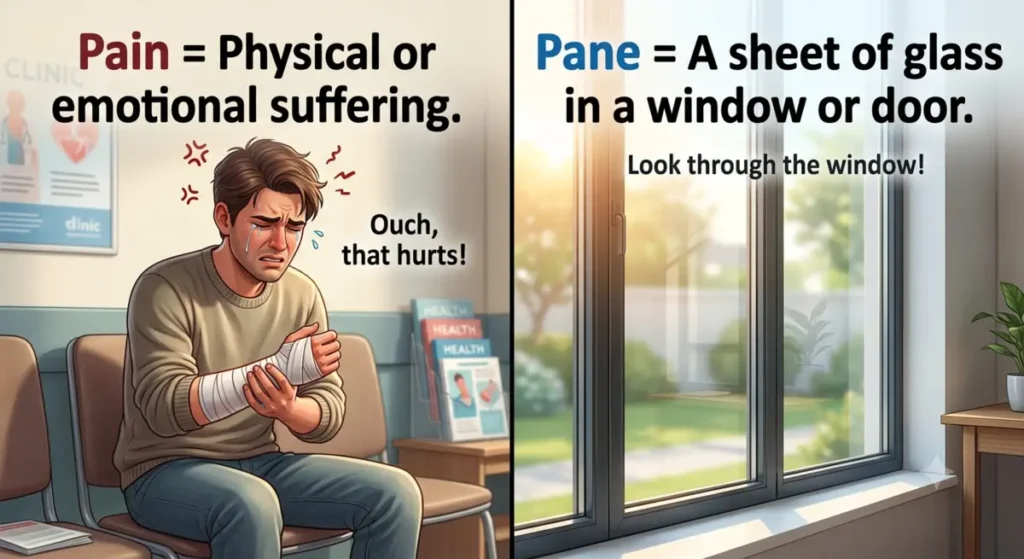
Many English learners confuse pain and pane because the two words sound the same. They are called homophones. Homophones are words with different meanings but the same pronunciation. People often search for “pain or pane” to learn which spelling is correct in writing.
This confusion happens in school essays, emails, social media posts, and even professional writing. A small spelling mistake can completely change the meaning of a sentence. For example, “window pain” is wrong because a window has a pane, not pain. On the other hand, “back pane” is incorrect because your back feels pain, not pane.
Understanding the difference between these words helps improve grammar, spelling, and communication. In this guide, you will learn the meaning of each word, where they come from, how British and American English use them, common mistakes, and the correct spelling for different situations.
Pain or Pane – Quick Answer
Pain means physical or emotional suffering.
Examples:
- I have pain in my leg.
- Losing a friend can cause deep pain.
Pane means a sheet of glass in a window or door.
Examples:
- The baseball broke the window pane.
- Please clean the glass pane.
Read more: Drunk or Drank: Difference and Which One Should You Use?
Quick Comparison Table
| Word | Meaning | Example |
| Pain | Physical or emotional hurt | She felt pain in her arm. |
| Pane | A sheet of glass | The pane cracked during the storm. |
The Origin of Pain or Pane
The word pain comes from the Latin word poena, meaning punishment or suffering. Over time, it entered Old French and then English. Today, it mainly refers to discomfort, injury, or emotional sadness.
The word pane comes from the Old French word pan, meaning a section or piece. In English, it became the word used for sections of glass in windows and doors.
Even though the words sound alike, they developed from completely different origins. English contains many homophones because words from different languages mixed together over centuries.
Read more: Broke or Broken: Difference and Which One Should You Use?
British English vs American English Spelling
There is no spelling difference between British English and American English for pain and pane. Both countries use the same spellings and meanings.
However, confusion still happens because the pronunciation is identical.
British vs American Usage Table
| Meaning | British English | American English |
| Suffering or hurt | Pain | Pain |
| Glass section in window | Pane | Pane |
Example Sentences
| Context | Correct Word |
| My knee hurts badly. | Pain |
| The window glass broke. | Pane |
| Emotional sadness after loss | Pain |
| Double-glazed window section | Pane |
Which Spelling Should You Use?
The correct spelling depends on the meaning you want.
Use pain when talking about:
- Injury
- Illness
- Emotional suffering
- Discomfort
Use pane when talking about:
- Glass windows
- Glass doors
- Window sections
Audience-Based Advice
| Audience | Recommended Usage |
| US readers | Use standard meanings: pain and pane |
| UK readers | Same spellings apply |
| Global audience | Use simple context to avoid confusion |
If your sentence talks about feelings or body discomfort, choose pain. If it talks about glass, choose pane.
Common Mistakes with Pain or Pane
Many writers accidentally swap these words because they sound the same.
Common Errors
| Incorrect Sentence | Correct Sentence |
| I feel pane in my shoulder. | I feel pain in my shoulder. |
| The pain of glass shattered. | The pane of glass shattered. |
| Emotional pane is difficult. | Emotional pain is difficult. |
| The window pain is cracked. | The window pane is cracked. |
Easy Memory Tip
- Pain = hurt
- Pane = glass
You can remember that pane has the word “panel” feeling because it is a section of something.
Pain or Pane in Everyday Examples
In Emails
- I am having pain in my back today.
- The office window pane needs repair.
In News Writing
- Many patients reported chest pain.
- The storm damaged several glass panes downtown.
On Social Media
- “Workout pain is real today!”
- “A bird hit my window pane this morning.”
In Formal Writing
- Chronic pain affects millions worldwide.
- The building uses energy-efficient glass panes.
Pain or Pane – Google Trends & Usage Data
Search data shows that pain is searched much more often than pane. This is because pain relates to health, emotions, and medicine, which people discuss daily.
Popular Usage by Context
| Word | Common Context |
| Pain | Health, emotions, injuries |
| Pane | Construction, windows, design |
Countries Where Searches Are Common
| Country | More Popular Search |
| United States | Pain |
| United Kingdom | Pain |
| Canada | Pain |
| Australia | Pain |
The word pane is mostly used in home improvement, architecture, and construction topics.
Comparison Table: Pain vs Pane
| Feature | Pain | Pane |
| Part of Speech | Noun | Noun |
| Meaning | Suffering or discomfort | Sheet of glass |
| Pronunciation | Same as pane | Same as pain |
| Common Use | Health and emotions | Windows and doors |
| Example | Head pain | Window pane |
FAQs About Pain or Pane
1. Is it pain or pane in a window?
The correct word is pane because it means a sheet of glass.
2. Is emotional pain spelled with “pain”?
Yes. Emotional suffering uses the spelling pain.
3. Why do pain and pane sound the same?
They are homophones. Homophones have the same pronunciation but different meanings and spellings.
4. What does pane mean?
Pane means a section of glass in a window or door.
5. What does pain mean?
Pain means physical discomfort or emotional suffering.
6. Are pain and pane interchangeable?
No. They have completely different meanings.
7. Is there a British or American spelling difference?
No. Both British and American English use the same spellings.
Conclusion
Understanding the difference between pain and pane is important for clear communication. Even though the words sound exactly the same, their meanings are very different. Pain relates to suffering, injury, or emotional discomfort, while pane refers to a sheet of glass in a window or door.
This confusion is common because English contains many homophones. The best way to avoid mistakes is to focus on the context of the sentence. If the topic is health, feelings, or injury, use pain. If the sentence talks about windows or glass, use pane.
Both British and American English use the same spellings, so there is no regional difference to remember. Simple practice and reading examples can help you quickly learn the correct usage.
By mastering words like pain and pane, your writing becomes clearer, more professional, and easier to understand in everyday communication, school work, emails, and business writing.

I am Bahadar Ali, a professional content writer and the author behind GrammarDrive.com. I am passionate about making grammar simple and accessible for everyone. Through my writing, I aim to help learners and professionals communicate with clarity and confidence.